

Originating from Peru, Bolivia, and Mexico, where it was cultivated since the time of the Incas and Aztecs, it was discovered by the Spaniards led by Pizarro in the Andes Mountains only in the mid-1500s.
The first Europeans who tasted it said its flavor resembled that of chestnuts.
In Italy, it arrived in the second half of the 16th century thanks to the Discalced Carmelite Fathers, who apparently taught not only how to cultivate and harvest it but also how to eat it (for example, sliced or fried and breaded). We are talking about "Her Majesty the Potato".
In our country, despite some famous scholars, including Alessandro Volta, trying to highlight its qualities, it was still not well appreciated by the mid-19th century; in fact, it was still scarcely present in the cookbooks of the time and was associated with poor people's cuisine.
Today, besides being appreciated by both young and old, it is an integral part of our table and the basis for many recipes, even in haute cuisine, due to its versatility and nutritional values.
This tuber, in fact, with 80 kcal per 100 g, is less caloric than bread (270 kcal) and pasta (346 kcal).
Would you like to grow it in your garden but don't know how to choose and what precautions to take for sowing, fertilization, and harvesting?
Today we will talk about seed potatoes, one of the main varieties of seed potatoes.
In particular, in this article, we will see:
- What are the best potatoes?
- The characteristics of seed potatoes
- How to grow seed potatoes
- How to choose the best seed potatoes

What are the best potatoes?
A nutritious and easy-to-grow tuber, potatoes should not be missing from any garden.
If you want to grow this vegetable, you must first know that, generally, you do not start from seeds, but plant the tuber directly.
You could also decide to plant potatoes bought at the supermarket, but this is a highly discouraged option, while it is advisable to purchase from a trusted retailer who can guarantee an extremely high-quality product.
No one forbids you, if you have been growing potatoes for a few years, to save your tubers and become self-sufficient. However, it is preferable to periodically renew the seed stock for the pleasure and satisfaction of experimenting with different species and savoring their multifaceted flavors.
You must also absolutely know that this tuber can transmit diseases, particularly viral diseases.
In this regard, seed potatoes differ from those we are used to because they are rich in certain substances useful for solving the problem of the formation of microorganisms or potentially harmful bacteria for both the plant and our health.
In addition to this, specific seed potatoes have selected qualitative and flavor characteristics. However, their production requires a suitable climate, which is quite difficult to find in Italy.
If you want to start a cultivation, you should opt for Dutch seed potatoes, like those selected by Millstore in its fifty years of experience, which you can receive directly at home.
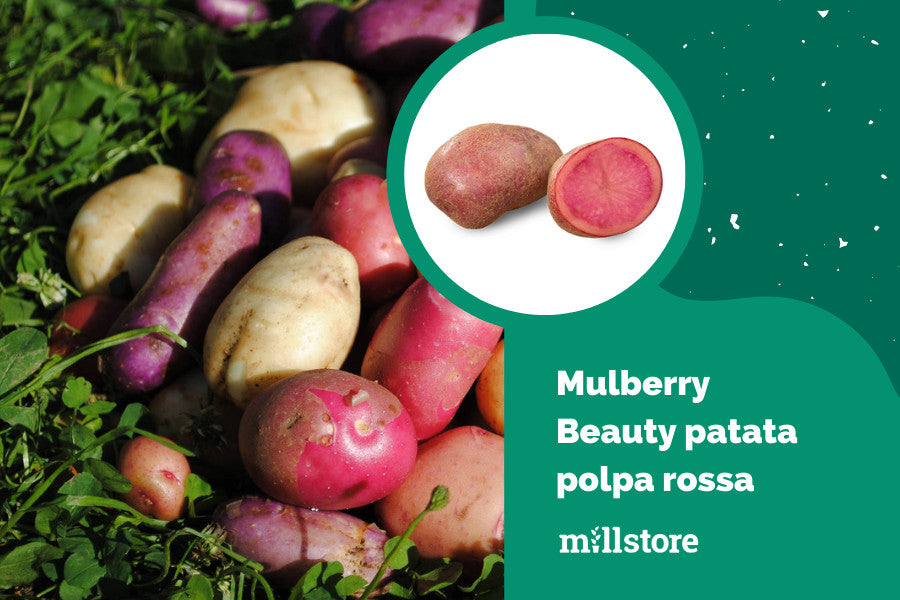
The characteristics of seed potatoes
First of all, keep in mind that there are different varieties of seed potatoes that differ, among other things, in color, flesh, culinary uses, and maturation time.
Seed potatoes are characterized by their extreme resistance to the typical diseases of this tuber and, for this reason, they are widely used in organic farming.
They also have quick maturation times and are very tasty.
Seed potatoes are a medium-early variety (90-120 days), not very storable (what is commonly called new potatoes) and are characterized by:
- Light yellow flesh and beige skin
- A typical elongated shape and firm flesh with a floury and granular texture
- Being poorly suited for mashing and used as an ingredient due to its particular consistency. Excellent, however, for use as a side dish or main dish. It is perfect, for example, for baking.
This species adapts well to various cultivation environments but, due to the climate, it is ideal to grow in southern regions and islands.
To obtain 100 square meters of planting, you will need to use about 20-25 kg of seed potatoes, which will be halved if you decide to cut the potatoes before planting.
Seed potatoes are very productive with a yield ranging from 250 to 500 kg per 100 square meters.
How to grow seed potatoes
First of all, it is essential to identify the right time for sowing. Seed potatoes should be planted between late winter and early spring depending on the climatic region you are in.
If you are growing in the South, where mild temperatures arrive earlier, you can start as early as March; if you are in the North, you will have to wait until the cold ends to avoid frost damaging the plants (the temperature must reach at least 10°C).
Now let's look at the operations you will need to perform to successfully grow seed potatoes.
Soil preparation and fertilization
First, you will need to prepare the soil so that it is well loosened, worked deeply using the right tools and properly fertilized. Soil preparation should be done in the previous autumn or, in any case, before sowing.
As for fertilization, potatoes are one of the most nutrient-demanding vegetables, so to obtain a good harvest, you cannot neglect this aspect.
You should start with an excellent base fertilization to continue at the time of sowing and throughout the initial growth period.
The essential elements for potatoes are nitrogen, which will help the plant develop well, while phosphorus and potassium will be useful for tuber formation.
For base fertilization, which you must perform before planting the tubers, you can use compost or mature manure (about 4-5 kg per square meter) to mix well with the soil to make it softer.
Be careful to incorporate them into the first 20-30 cm at most because this is where most of the roots will be found.
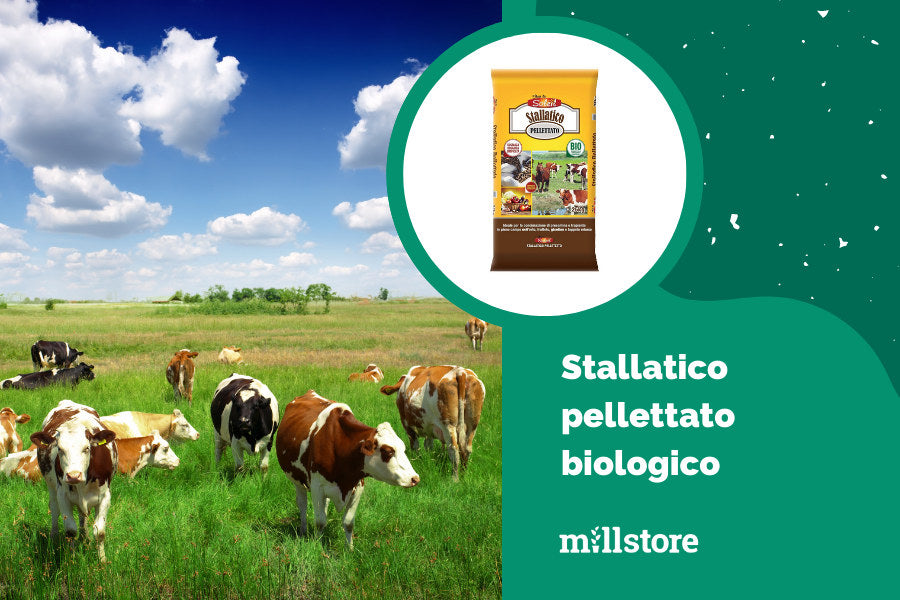
For convenience, during the cultivation phase where you will need to reintegrate more fertilizer, both during planting and in the first growth period of the plant (when it reaches 15-20 cm) you can opt for organic pelletized manure.
If you have a fireplace at home, set aside the wood ash, rich in potassium, and "dust" it on your potatoes.
How to sow seed potatoes: distances and companion planting
When sowing seed potatoes, remember that, being a rather early variety, you should maintain a distance of about 50-70 cm between the rows and 25-35 cm within the row (unlike later varieties that require about ten centimeters more space) and bury the tuber at a depth of 10 cm (the position is indifferent).
You can sow both whole potatoes and pieces of tuber, but only if the potato weighs more than 50 grams. If you choose this second option, remember that each piece you plant must weigh more than 20 grams and have at least two buds (also called eyes) from which the new plant will grow.
It will also be essential to cut the potatoes into wedges to avoid damaging the sprouts. Allow the cut to dry for at least 6-12 hours before sowing.
If you are planning your garden, keep in mind that the beneficial companion plants for potatoes are beans, peas, cabbages, and sunflowers.
As we have already mentioned, sowing should be done between late winter and early spring depending on the geographical area where you cultivate, considering that the ideal temperature is between 12°C and about 20°C and should never drop below 10°C.
Especially if you want to grow an organic garden, it will be essential to rotate crops every 3-4 years, avoiding planting potatoes in soil where a solanaceous plant (i.e., a plant from the same family) has already been grown.
What happens if you don't hill the potatoes?
Hilling, or moving some soil towards the base of the plant, is one of the operations you cannot skip for the success of your cultivation.
You will need to perform two hilling operations:
-
The first, light, when at least half of the plants have produced leaves. Consider that after 15-20 days from sowing, the first two leaves will appear, and the sprouts would be damaged in case of frost. The purpose of hilling is to bury the leaves to protect them.
This operation also helps eliminate the first weeds and forces the plant to elongate its stem, thus increasing the production of stolons and therefore potatoes.
-
The second hilling, about a month after the first, will be the opportunity to add some fertilizer. The goal is to create a mound of soil around the plant of about 30 centimeters to protect the tubers from the sun.
You must know that direct light causes the production of solanine, a toxic substance, and that potatoes, when exposed to sunlight, turn green and are inedible.
So be careful not to neglect these two steps, or your efforts will be in vain.

When and how to water seed potatoes
Regarding watering, the most suitable systems are those that flow or drip irrigation systems.
Water your seed potatoes early in the morning when temperatures are cooler. This precaution is important to preserve the health of the plant, as at 18°C, downy mildew, a disease caused by a fungus, may be lurking.
The periods of greatest water demand are during the appearance of the buds and then at the end of flowering. Usually, in spring, if the season is rainy, you will not need to water further.

When to harvest seed potatoes and what yield to expect
The timing of the harvest varies depending on the type of result you want to achieve. If you prefer new potatoes, you should proceed when the tuber is still green; otherwise, for normal potatoes, which allow for longer storage, you will have to wait until the plant dries out completely and turns yellow.
Since the maturation time can be subject to variables such as climate and the year, to be sure, perform this simple test: rub the skin of the potato; if it does not come off easily, the time is right.
For the harvesting operation, we recommend using a fork with which you will lift the clod of soil under the plant where you will find your beautiful tubers corresponding to the roots.
On average, you will obtain 3-4 kg of potatoes per cultivated square meter.
How to choose the best seed potatoes
We have seen what are all the main precautions to follow to obtain a good production of seed potatoes: soil preparation, proper fertilization, identifying the right time for sowing, choosing the most suitable companion plants, hilling the soil, providing the right amount of water, and harvesting at the right times will allow you to achieve truly satisfying results.
However, the first fundamental step, as mentioned at the beginning of this article, is to choose seed potatoes rather than the common potatoes you find at the supermarket.
For this reason, turning to a reliable retailer who can advise you on the types most suitable for your needs and climate is undoubtedly the winning choice.
If you would like to receive information or support, the Millstore experts are at your disposal by phone, email, WhatsApp, or on the website chat to answer all your questions and guide you in the varied world of seed potatoes.